或称
CompletableFuture
目的
Promise是某个值的代理,这个值在创建promise时尚未确定。它允许您将promise与异步操作的最终成功值或失败原因相关联。promise是一种编写异步代码的方法,使得它看起来仍然像是以同步方式执行一样。
解释
promise对象用于异步计算。一个promise代表一项尚未完成但预计在未来完成的行动。
与回调对象相比,promise提供了一些优势:
- 函数组合和错误处理。
- 防止回调地狱并提供回调聚合。
真实世界例子
我们正在开发一个软件解决方案,可以下载文件并计算这些文件中的行数和字符频率。Promise是一个使代码简洁易懂的理想解决方案。
通俗的说
Promise是正在进行的异步操作的占位符。
维基百科说
在计算机科学中,future、promise、delay和deferred是指在一些并发编程语言中用于同步程序执行的结构。它们描述了一个对象,该对象充当通常是因为其值的计算尚未完成而最初未知结果的代理。
程序示例
在本例中,下载一个文件并计算其行数。然后,计算出的行数被使用并打印在控制台上。
让我们首先介绍一个实现所需的支持类。这是PromiseSupport。
java
class PromiseSupport<T> implements Future<T> {

  private static final Logger LOGGER = LoggerFactory.getLogger(PromiseSupport.class);

  private static final int RUNNING = 1;
  private static final int FAILED = 2;
  private static final int COMPLETED = 3;

  private final Object lock;

  private volatile int state = RUNNING;
  private T value;
  private Exception exception;

  PromiseSupport() {
    this.lock = new Object();
  }

  void fulfill(T value) {
    this.value = value;
    this.state = COMPLETED;
    synchronized (lock) {
      lock.notifyAll();
    }
  }

  void fulfillExceptionally(Exception exception) {
    this.exception = exception;
    this.state = FAILED;
    synchronized (lock) {
      lock.notifyAll();
    }
  }

  @Override
  public boolean cancel(boolean mayInterruptIfRunning) {
    return false;
  }

  @Override
  public boolean isCancelled() {
    return false;
  }

  @Override
  public boolean isDone() {
    return state > RUNNING;
  }

  @Override
  public T get() throws InterruptedException, ExecutionException {
    synchronized (lock) {
      while (state == RUNNING) {
        lock.wait();
      }
    }
    if (state == COMPLETED) {
      return value;
    }
    throw new ExecutionException(exception);
  }

  @Override
  public T get(long timeout, TimeUnit unit) throws ExecutionException {
    synchronized (lock) {
      while (state == RUNNING) {
        try {
          lock.wait(unit.toMillis(timeout));
        } catch (InterruptedException e) {
          LOGGER.warn("Interrupted!", e);
          Thread.currentThread().interrupt();
        }
      }
    }

    if (state == COMPLETED) {
      return value;
    }
    throw new ExecutionException(exception);
  }
}
有了 PromiseSupport ,我们就可以实现真正的 Promise。
java
public class Promise<T> extends PromiseSupport<T> {

  private Runnable fulfillmentAction;
  private Consumer<? super Throwable> exceptionHandler;

  public Promise() {
  }

  @Override
  public void fulfill(T value) {
    super.fulfill(value);
    postFulfillment();
  }

  @Override
  public void fulfillExceptionally(Exception exception) {
    super.fulfillExceptionally(exception);
    handleException(exception);
    postFulfillment();
  }

  private void handleException(Exception exception) {
    if (exceptionHandler == null) {
      return;
    }
    exceptionHandler.accept(exception);
  }

  private void postFulfillment() {
    if (fulfillmentAction == null) {
      return;
    }
    fulfillmentAction.run();
  }

  public Promise<T> fulfillInAsync(final Callable<T> task, Executor executor) {
    executor.execute(() -> {
      try {
        fulfill(task.call());
      } catch (Exception ex) {
        fulfillExceptionally(ex);
      }
    });
    return this;
  }

  public Promise<Void> thenAccept(Consumer<? super T> action) {
    var dest = new Promise<Void>();
    fulfillmentAction = new ConsumeAction(this, dest, action);
    return dest;
  }

  public Promise<T> onError(Consumer<? super Throwable> exceptionHandler) {
    this.exceptionHandler = exceptionHandler;
    return this;
  }

  public <V> Promise<V> thenApply(Function<? super T, V> func) {
    Promise<V> dest = new Promise<>();
    fulfillmentAction = new TransformAction<>(this, dest, func);
    return dest;
  }

  private class ConsumeAction implements Runnable {

    private final Promise<T> src;
    private final Promise<Void> dest;
    private final Consumer<? super T> action;

    private ConsumeAction(Promise<T> src, Promise<Void> dest, Consumer<? super T> action) {
      this.src = src;
      this.dest = dest;
      this.action = action;
    }

    @Override
    public void run() {
      try {
        action.accept(src.get());
        dest.fulfill(null);
      } catch (Throwable throwable) {
        dest.fulfillExceptionally((Exception) throwable.getCause());
      }
    }
  }

  private class TransformAction<V> implements Runnable {

    private final Promise<T> src;
    private final Promise<V> dest;
    private final Function<? super T, V> func;

    private TransformAction(Promise<T> src, Promise<V> dest, Function<? super T, V> func) {
      this.src = src;
      this.dest = dest;
      this.func = func;
    }

    @Override
    public void run() {
      try {
        dest.fulfill(func.apply(src.get()));
      } catch (Throwable throwable) {
        dest.fulfillExceptionally((Exception) throwable.getCause());
      }
    }
  }
}现在我们可以展示完整的例子。下面是如何使用Promise下载并计算文件中的行数。
java
  countLines().thenAccept(
      count -> {
        LOGGER.info("Line count is: {}", count);
        taskCompleted();
      }
  );

  private Promise<Integer> countLines() {
    return download(DEFAULT_URL).thenApply(Utility::countLines);
  }

  private Promise<String> download(String urlString) {
    return new Promise<String>()
        .fulfillInAsync(
            () -> Utility.downloadFile(urlString), executor)
        .onError(
            throwable -> {
              throwable.printStackTrace();
              taskCompleted();
            }
        );
  }
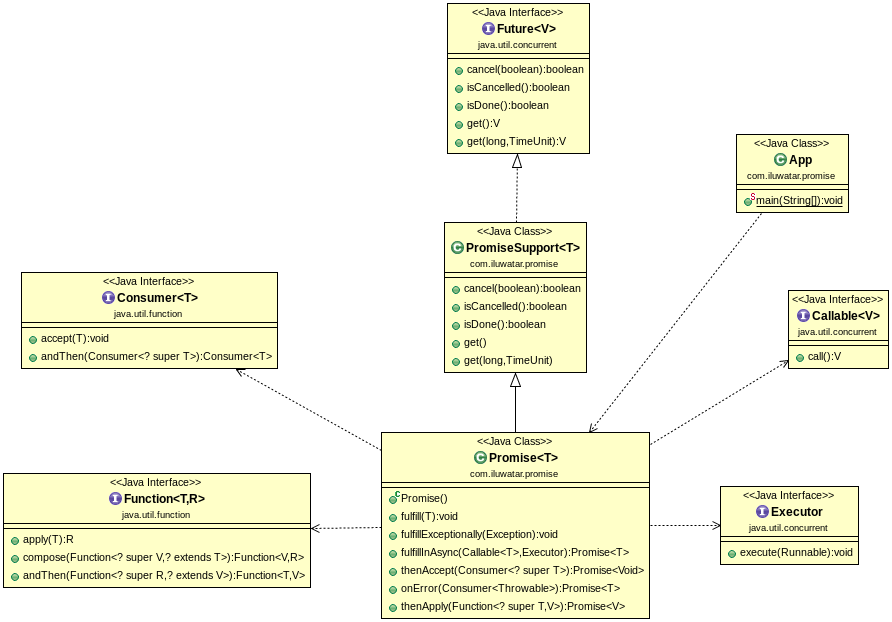
类图
适用性
Promise模式适用于需要异步完成某些工作的并发编程,并且:
- 由于回调地狱,代码的可维护性和可读性受到影响。
- 对于异步任务,您需要编写承诺,并需要更好的错误处理。
- 你想使用函数式编程。